Posts

Showing posts with the label how does red light therapy work

Glow Up with Red Light: The Magic of Therapy Panels
Image
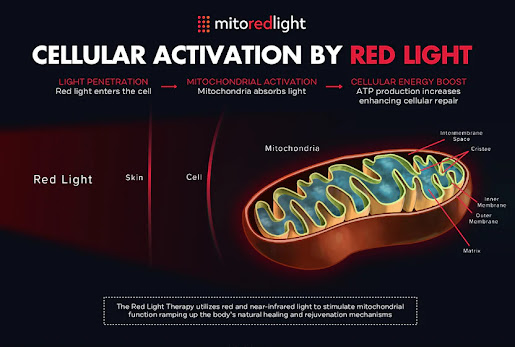
Over the years, red light therapy has become increasingly popular as a viable noninvasive health and beauty therapy. Red light panels uses wavelengths of light to help heal, reduce inflammation, and improve skin health. Probably the most popular devices for red light therapy are red light panels, which arguably top the list of most popular devices by home or professional users seeking to achieve the therapeutic effects of red light. But how is this therapy really working, and how are red light panels so effective? What is Red Light Therapy? Red Light Therapy, or what most people know very well as RLT, are scientifically terms low-level laser therapy abbreviated as LLLT or photobiomodulation. In layman's terms, it can simply be described as shining red or near-infrared light to penetrate through the skin and reach cells. RLT is usually to be used with wavelengths of either 600 nm to 650 nm for red light or 800 nm for near-infrared light. These wavelengths are absorbed by the mi...

The Healing Power of Red Light Therapy Benefits and Insights

Image
  Light isn't just a source for seeing; it is crucial for human health. Natural sunlight contains a spectrum of wavelengths, including red and near-infrared light, which are vital for cell functions and well-being. The modern lifestyle and technology have reduced exposure to these beneficial wavelengths, which has severe repercussions on human health. Hence, one should be interested in understanding the role and importance of near-infrared light and red light therapy and how one can benefit from red light therapy. The Problem with Modern Lighting Deficiency in Beneficial Wavelengths Old incandescent bulbs emitted light across a wide range-including red and near infrared wavelengths. Whereas, modern lighting such as LEDs and CFL light emphasizes efficiency rather than total spectral completeness. These energy-efficient lighting systems lack sufficient red and near-infrared wavelengths, both critical for cellular health and well-being. Low irradiance indoor lighting Natura...

The Importance of Red Light Therapy for Modern Humans

Presently, due to the popularity of energy efficient sources of the LED and CFL, the deficiency of red and even near-infrared light is increasingly alarming. This wavelength is very important for general well-being and health.   House Lighting Problems Lighting deficiency normally happens when people spend time inside buildings, whether at work, school, or home-and in automobiles, they will receive only a small percentage of the sunlight their predecessors received. Even under cloudy skies, sunlight can provide a broad spectrum, including the red and near-infrared wavelengths; these are usually missing in bright indoor artificial lighting. This could be compounded by implementing energy-efficient windows that would limit further exposure to the critical wavelength spectrum. A massive reduction in red and near-infrared light exposure could have been contributory to the several health hazards; hence alternatives need to be sought. What is Red Light Therapy? Red light ther...